Showing posts with label Anti-Displacement Front. Show all posts

Wednesday, February 21, 2007

An Invitation to Swim Against the Tide Together

We could give you lifetimes of empty:
The unmarked graves
The lost languages
The uprooted trees and histories
The dead stares on the faces of nameless children
Before I start this poem we could be silent forever
On just long enough to hunger,
For the dust to bury us
And you would still ask us
For more of our silence.
--Emmanuel Ortiz

This letter reaches you amidst tall claims… about a strong and secure India riding the high tide of prosperity in South Asia in the 21st century. Growth, Security and Development are the buzzwords on the lips of anyone and everyone who matters in the sub-continent. A kaleidoscope of the emerging big picture—surfeit of images of super highways, malls, flyovers, golf courses, tourist resorts, mega-dams as hydel power projects, corporate farming, Special Economic Zones, urban beautification and finally a boomimg sensex—in the sub-continent as signs of growth, security and development is also being flaunted in the sensation driven media.

The vast sections of the people have been subjected to the worst kind of socio-economic crisis in the name of development. Today more and more tribals, dalits, minorities and the poorest of the poor are most cruelly removed from their forests, fields, lands, homes and cultures. They are being evicted from their lives and livelihoods.

When this letter reaches you probably many more farmers might have committed suicide. In the rich belts of the so-called ‘green revolution’ in Punjab, Haryana, Karnataka, Andhra Pradesh… .The granaries of India have become the graveyards for the farmers. More than a lakh farmers have so far committed suicide. Due to debt peonage. For the farmers agriculture is no more a viable economic enterprise. There is no economic incentive for the farmer to continue with the same agricultural produce. There is no way the landless agricultural labourer can work in the fields as the wages have gone down.

Peasants as a community also has become economically unviable for the state. As per experts (the bane of our times) the purchasing power of an IT professional is considered equivalent to 100 peasants put together.
In the name of development the best of arable lands in Haryana, Punjab, West Bengal, the Vidharbha region of Maharashtra is being sold for a pittance to the MNCs for setting up Special Economic Zones (SEZs). The violence of an uncertain future have abounded the lives of vast sections of the masses who stand displaced in every possible way in this ‘model of development’. Displaced from their farmland, forest land, slums, small scale industries, villages, national territories. Displaced from their productive living. It is not to say that their lives till now have been devoid of any uncertainties, any form of exploitation or oppression.

The people of South Asia are subjected to most violent accumulation of capital. The position of the vast sections of the masses should not be confused with the dreams that are being peddled by the money merchants who want to sell the land, its resources, its peoples and their memories and dreams for a pittance.

The need of the hour is to come together, join hands and raise the voice of our conviction to redefine the world. For it is only through struggle that we can stop these designs: Of not only to exploit us economically, but also to reshape our reality so that we become willing slaves and willing servants. And it is only through uncompromising struggles that we redefine our world, where the people and only the people are the masters of their destiny. It is only possible through a united struggle of all fighting people and their organisations.

We invite you to be part of this anti-imperialist resistance, a platform against all forms of displacement to stop forever all displacement in the name of ‘development’. A note in this regard is enclosed. Let us discuss and initiate a peoples’ front against all kinds of displacement. We look forward to your participation in a meeting of people’s organisations and individuals in Ranchi on 20th and 21st January, 2007. The meeting begins at 11 A.M. The venue is Patel Bhawan, Lalpur Chowk, Ranchi, Jharkhand.

Endorsed by:
1. Dr. B. D. Sharma, Bharat Jan Andolan;
2. Gursharan Singh, Eminent People’s Artist, Punjab
3. Mahasweta Devi, Writer
4. Surendra Mohan, Socialist Front
5. K G Kannabiran, Eminent Human Rights Advcocate
6. Shyam Gaekwad, Labour Front, Maharashtra
7. Arundhati Roy, Writer
8. GN Saibaba, Revolutionary Democratic Front (RDF)
9. Shamsher Singh Bisht, Loksangarsh Vahini, Uttarakhand
10. A.K. Roy, Marxist Co-ordination Committee, Jharkhand
11. Debranjan & Bhagwan Majhi, PSSP, Orissa
12. Bojja Tarakam, Eminent Human Rights Advcocate and Convenor, PDFI, Andhra Pradesh Committee
13. Anand Teltumbde, Writer, Human Rights Activist, Maharashtra
14. M T Khan, Prominent Civil Rights Activist
15. Vittal Raj, All India Federation of Trade Unions (AIFTU)
16. Chhattisgarh Mukti Morcha
17. Professor Keshav Rao Jadav, Eminent Socialist leader and Prominent Civil Rights Activist
18. Prof. KR Chowdry, Andhra Pradesh
19. Suguna Rao, Telengana Aikya Vedika
20. BP Kesari, Jharkhand
21. Shashibhushan Pathak, PUCL, Jharkhand
22. Thomas Mathew, Samajik Nyaya Morcha, Delhi
23. Harish Chandola, Senior Journalist, Uttarakhand
24. Rakesh Rafiq, Yuva Bharat
25. Tridib Ghosh, PDFI
26. PC Tiwari, Jan Adhikar Manch, Uttarakhand
27. Madhuri, Jagruti Adivasi Dalit Sanghatan, Bardwani, Madhya Pradesh
28. Gopal Naidu, Vidrohi Sanskritik Chalwal, Maharashtra
29. Revolutionary People’s Front, Kerala
30. Sini Soy, Kaling Nagar Bisthapan Birodhi Activist, Orissa
31. Amin Mharana, Jan Jamin Jungle Khani Surakhya Samiti, Sukinda Orissa
32. Partap Chinara, Chasi Mulia Dalit Sangha, Puri, Orissa
33. DR. Bisvajit Roy, Rastriya Yuva Sangathan, Orissa
34. Nav Nirman Samiti, Orissa
35. Bhakta Batshal Mohanty, Kendujhar Bisthapan Birodhi Jan Manch, Orissa
36. Suraj Tekam, Vananchal Kamgar Sarvangin Vikas Samiti, Chattishgarh
37. Judge Tirki. Jal Jangal Jamin Surakhsa Parishad, Orissa
38. Ram Chandra Sahoo, Rourkela Local Displaced Association 32 Villages
39. Vistapan Virodhi Jan Sangharsh Manch, Jharkhand
40. Auranga Bandh Virodhi Sangarsh Samithi, Latehar, Jharkhand
41. Kutkoo Dam Visthapan Virodhi Sangharsh Samithi, Garhwa, Jharkhand
42. Hindalko Visthapan Sangharsh Samithi, Richu Gutha, Jharkhand
43. Jameen Raksha Visthapan Sangarsh Samithi, Amrapada, Jharkhand
44. Tiger Project Visthapan Samithi, Betala, Jharkhand
45. Khutkathi Sangh, West Singhbhum, Jharkhand
46. Chhatra Yuva Sangharsh Mukti Vani, Chandel, Jharkhand
47. Visthapan Mukti Vahini, Chandel, Jharkhand
48. Netrahat Field Firing Range Virodhi Manch, Netrahat, Jharkhand

49. Coal Visthapan Sangharsh Samithi, Peeparvar, Jharkhand
50. Bauxite Khanan Visthapan Sangharsh Samithi, Gumla- Lohardaggah, Jharkhand
51. Visthapit Sangharsh Samiti, Tetheriakhad, Jharkhand
52. Caol Visthapit Sansharsh Samiti, N K Area, Jharkhand
53. Visthapan Virodhi Samanvay Samithi, Jharkhand
54. Hul Jharkhand Kranti Dal, Jharkhand
55. Nau Janwadi Chetana Manch, Jharkhand
56. NTPC Vistthapan Sangharsh Samithi, Chandwa, Jharkhand
57. Surangi Visthapan Sangharsh Samithi, Singhbhum, Jharkhand
58. Birsa Ulugulan Manch, Namkum, Jharkhand
59. Mahila Ulugulan Manch, Namkum, Jharkhand
60. Ravi Study Circle, Ranchi, Jharkhand
61. HEC Vishapan Munch, Ranchi, Jharkhand
62. Paryavaran Bachavo Samithi, Kaandra Raghunathpur, Jharkhand
63. D C Gohai, Boakaro Visthapan Sangh, Jharkhand
64. Gautam Bose, Tatanagar, Jharkhand
65. Bapikar Samanyay Samiti, Jharkhand
66. Angami Pandey, Sajha Jan Sangharsh Abhiyan, Jharkhand
67. Sambhu Mahato, Jharkhand
68. Professor Ramsharan, Ranchi College, Jharkhand
69. Lambada Hakkula Poratha Samithi, Andhra Pradesh
70. Tudum Debba, Andhra Pradesh
71. Adivasi Vidyardhi Samskhema Parishad, Andhra Pradesh
72. Adivasi Aikya Vedika, Andhra Pradesh
73. Patriotic and Democratic Front, Andhra Pradesh
74. Adivasi Swayam Prathipathti Sadhana Samithi, Vishakha Agency, Andhra Pradesh.
75. People’s Land Commission, Andhra Pradesh


(A complete list of Signatories will be provided soon.)

20 January 2007

Venue: Patel Bhawan, Lalpur Chowk, Ranchi, Jharkhand
Date: 20, 21 January 2007
Time: 11 AM

First conference of Anti-Displacement Front

Chalo Ranchi! Chalo Ranchi! Chalo Ranchi! Chalo Ranchi! Chalo Ranchi!

Onwards to the First Conference,
Anti-Displacement Front
March 22nd, 23rd 2007, Ranchi, Jharkhand
Observe 76th Martyrdom Day of Bhagat Singh as Anti-imperialist Day

In Lieu of an Invitation

Heaven is a forest of miles and miles of Mohua trees
And hell is a forest of miles and miles of Mohua trees with a forest guard in it.
--A popular saying of the Muria Adivasi of Bastar, Chhattisgarh

Whatever contributes to forcefully assimilating people to Nature is a dangerous threat… At least that has been the lesson, of any discernible reading of the history of humankind. Here too, in the South Asian sub-continent, the experiences of the vast sections of the people have not been an exception. Specifically, after the advent of British colonialism…

Post-1947, there has hardly been any difference in the experiences of the people of the sub-continent. “If you are to suffer, you should suffer in the interest of our country”, this was what Jawaharlal Nehru asked the villagers, while laying the foundation stone of the Hirakud dam in Sambalpur, Orissa. Hirakud, or the dam at Bhakra, Nehru termed these ‘temples of modern India’. Ever since then, through the years of the so-called ‘green revolution’, canal irrigation cultivation, introduction of cash crops and hybrid variety of seeds we have daily proof that we create our world against Nature for want of profit. That people are forced to be the mute recipients of this expropriation of wealth in the name of development; of creating a new world out of Nature that is useful for a few rich and powerful. Even the most conservative estimate of the Government of India in 1994, after lot of jugglery with statistics, had to admit that more than 10 million (1 crore) people are still to be rehabilitated displaced by dams, mines, deforestation and other ‘development projects’.

Today this logic of creating a world against Nature have taken the most aggressive turn; voluminous in its scope of exploitation and destruction; murderous in its reach in that it ravages the lives and livelihoods of lakhs and lakhs of peoples. The tall claims of Special Economic Zones as havens of employment generation and productivity with legal provisions totally different from the law of the land is further evidence of recolonisation of the land and its people for brutal exploitation of imperialist and local capital. The innumerous Memoranda of Understanding (MoUs) that are being signed by the GoI with various monopolies for mining in Orissa, Chhattisgarh, Andhra Pradesh and Jharkhand are open invitations to loot and plunder the natural resources for the predatory needs of the market.

The grand design to construct mega-dams in hundreds across the sub-continent so as to generate power to sell it to the far-east market and massive super highways to access every nook and cranny of the region to the reach of big capital will without fail ravage various cultures, memories, lives and livelihoods of these peoples. Not to say, this package to loot and plunder the wealth of these regions will pit the various peoples in this region against each other.

Big labour, big industry and big capital have forced the people of the sub-continent to adjust and be assimilated in accordance to its needs. These experiences legitimized with it a history of exploitation, of domination, of considering human beings as ‘human resources’. Significantly, the use of the word ‘human resources’ confirms the dangerous threat of forcing people to comply with the needs of imperialism and its domestic lackeys. The poorest and the most vulnerable become easy targets. The tribal whether in Orissa, Jharkhand, Arunachal or Meghalaya and the worker in the small scale sector in Delhi, Mumbai or Calcutta, the landless agricultural labourer in Haryana, Bihar, Uttar Pradesh or Andhra Pradesh and even the small and middle peasant in Punjab, Haryana, Vidharbha and Andhra Pradesh all are classified, registered alongside the mineral, vegetal and animal resources. Mind you, people so designated are not the aim of production, but its raw material.

From Polavaram to Tipaimukh, from Nandigram, Singur Shalgoni, Dadri to Vidharbha, from Kalinganagar, Kashipur to Chhattisgarh and North Andhra and Telengana and Karnataka this language is not deceptive: as we all know, resources are to be exploited, and in our world they are bound to be destroyed. The struggle has increasingly become between two worlds in opposition: that of the world of the greatest number of people labeled as ‘natural resources’ and the world of those who treat them as such.

The reckoning of the hour is to forge an uncompromising resistance at the ground level while building a massive public opinion against this politics of loot and plunder in the name of development. At the South Asian and international level.

Significantly, this year marks the birth centenary of Shaheed Bhagat Singh, whose death defying martyrdom had stoked the flames of revolution among the youth and the vast section of the impoverished masses in the sub-continent against British colonialism. Moreover, that March 23rd his Martyrdom day marks the conclusion of the founding conference of Anti-Displacement Front will be a resounding start for a militant movement against all forms of displacement. It is time that we once again reclaim the revolutionary legacy of this great freedom fighter. It is important and inevitable that the resistance be forged at as many levels as possible.

As you may know, a process towards building a mighty resistance against these displacements under the garb of ‘development’ has been initiated. The first preparatory meeting was at Ranchi, in Jharkhand on the 20, 21st of January 2007. Over 100 organizations and individuals are part of this process to build a massive people’s resistance against all forms of displacement at the South Asian level.

The first conference of this Anti-Displacement Front will be on the 22nd, 23rd of March 2007 at Ranchi, Jharkhand. We invite you to be part of and hence strengthen this process.

Cultural performances against displacement and anti-imperialism by eminent theatres and people’s cultural artistes will start on 21st March onwards.
A detailed programme will be sent a week before the Conference.

Please let us know your response and inform us your participation in advance.

No to Displacement! No to Rehabilitation!
Only Change with Equity & Justice!


On behalf of the Preparatory Committee
Against Displacement
Dr. B D Sharma & G N Saibaba
Email:notodisplace@rediffmail.com
fightdisplacement@hotmail.com
Phones: 011-24353997, 9910455993.

13 February 2007.

A Note on the Question of Displacement

Anti-Displacement Front


The natural and legal rights of the people are being trampled on a scale unprecedented in post-1947 India. Successive governments at the centre would call this the needed drive for a New India marching forward in the 21st century as a major power. Development and Security are the twin needs of the Brave New World in which India and the sub-continent of South Asia is a vital cog. This development can only happen with the massive inflow of Foreign Direct Investment in the form of Memorandum of Understandings (MoUs), Foreign Institutional Investments (FII). Inequality has been considered as a necessary condition for mobilising savings and capital formation. To envisage the provision of infrastructure in the form of transport, communication, power, services etc. While it will give windfall profits to the imperialist multinationals and their domestic allies—big business houses, bureaucrats, politicians, et al, the masses have become further impoverished.
A decade-and-a-half of these policies have, pushed more than one lakh peasants to suicide. Massive unemployment have further impoverished an already devastated people in both rural and urban areas and marginalized millions.
The second wave of ‘economic reforms’ is a violent assault on the right to life and livelihood of the masses. Apart from continuing the ‘development’ driven through big dams, super highways and other infrastructural projects, the new phase of accumulation of capital involves gigantic mining projects, Special Economic Zones (SEZs), urban renewal and beautification.

Displacement as ‘Development’
All these policies are being implemented in the name of ‘development’, ‘modernization’, taking India into the club of elite countries. This is no doubt ‘development’, of a particular kind. It is the model of ‘development’ that gives gigantic amounts of wealth to the super-rich (foreign and Indian) while increasingly impoverishing more and more people. It is unmitigated loot of all our natural wealth and mineral resources on a scale never witnessed before. It is development OF and FOR the market; FOR the creation of a market based on the expenditure OF the very rich together with a growing upper middle class who live off crumbs thrown off the table of the super-rich. This development of displacement have pervaded the entire spectrum of diverse production of material life of the sub-continent—from hunters and gatherers, pastorals, shifting cultivators, forest dwellers especially in protected areas like sanctuaries, traditional cultivators, advanced farmers, trading centres, service and industrial centres, towns and cities. All the four dreaded Ds are fast engulfing our societies—Displacement, Disorganisation, Destitution and Decimation.

Massive Mining Projects of MNCs: Opening the Veins of South Asia
The mining projects in just the states of Orissa, Jharkhand, Chhattisgarh and Andhra Pradesh entail investments of about Rs.5 lakh crores. Some 20 percent of the tribal people have already been uprooted from their homes. The resource rich region of Dandakaranya and its vicinity in the states of Orissa, Chhattisgarh, Jharkhand and the adjoining areas in West Bengal, Vidharbha and eastern Madhya Pradesh account for more than three fourth of the total mineral wealth of India. On a smaller scale, mining projects are also coming up in all the states wherever there is some wealth to extract. The regions within these states that have been set aside as prospective areas rich in mineral wealth such as coal, iron ore, bauxite, diamonds, uranium, thorium etc. is inhabited by the poorest of the poor in India. Hundreds of MoUs have been signed by the government with various Multinational Corporations and Indian Monopolies. Much of the mineral wealth is exported while the rest is used to serve the palatial needs of India’s neo-rich. New laws are being enacted to undo the rights of the people over these resources. The better known examples are the Indian Forest Act, Indian Fisheries Act, Indian Mineral Act, and various Urban Development Acts. In the process, lakhs and lakhs will be displaced—not only will their land and forests be seized, but also their livelihood, their right to a dignified existence destroyed.

Special Economic Zones (SEZs): Enclaves of Foreign Occupation
The rural areas in India are facing massive unemployment due to lack of opportunities. A backlash of the state policy of opening up of the markets to monopolies. The traditional crafts have collapsed as machine goods are flooding the rural markets. The labour displacing machines have reduced the labour input per acre to less than one-third compared to the post-47 situation. Even in the so-called Employment Generation Programmes of the government commission agents and contractors are on to make a fast buck by using machines. Moreover a large part of the land is held by the absentee owners which results in a heavy drain of current income of the rural economy. These absentee land owners are prone to sell away their lands for profit. The crisis in the rural scenario is further exemplified with the abysmally low entitlement for work in agriculture hovering around 30 rupees a day. The ‘educated youth’ who are rather the deskilled force in rural India are not ready to soil their hands for such a low pay. The massive alienation of people in the rural areas from their current means of livelihood with no worthwhile substitute in sight is imminent.
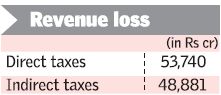
The Special Economic Zones have been showcased as the panacea for skyrocketing unemployment and lack of opportunities in the urban and rural regions in India. These zones throughout the country will create enclosures where no laws of the land would hold. This tantamount to a modern form of the East India Company; foreign enclaves within the territory of the country which facilitates the SEZs. Even conservative estimates of the RBI projects a loss of about Rs.1.7 lakh crores in revenue for the Indian government over the next four years due to the Special Economic Zones. But the worst hit will be the rural populace whose prime lands are being forcibly seized. Lakhs of acres have already been taken over and every day new announcements come of more and more SEZs being granted permission. In the much hyped ‘Green Revolution’ belts of Haryana and Punjab where the suicide deaths of farmers are the order of the day, farmers who are deep in debt are even ready to take whatever crumbs thrown by the government as compensation for the acquired land. In fact this has proved to be the last straw on the farmer’s back leading to large scale alienation of land and unabating strings of suicides. The man made crisis is so acute in the Green Revolution pockets that for the farmer to hold on to the farming land as a viable enterprise has become an unenviable task.
There is no economic incentive for the farmer to continue agriculture in these lands. The government has refused to look into the root causes of agriculture being rendered non-viable as the insidious policy of the state. Instead it legalised the practice of usury by credit institution including even the cooperatives through the ingenious legal jugglery of excluding them from the very definition of moneylenders. In 1947, 70 per cent of the people in India were engaged in agriculture and allied activities. Their share in the Gross National Income was 65 percent. According to the Farmer’s Commission while the number of persons in the above category has marginally declined from 70 to 65 percent, their share in the National Income has nose dived to 20 percent. The projections of Vision 2020 envisages only a 6 percent share for the 60 percent depending on agriculture.
Already unofficial estimates show that more than 300 SEZs are on the pipeline. As per official estimates about 35-40% of existing industry and finance (including IT sector) will move to these enclaves to avail of the tax-free profits that these havens allow. The government talks much trash of generating employment but the reality is that it is mostly existing business that will shift location to these SEZs to avail of the huge benefits.

Urban ‘Visions’: Fortifying Urban Spaces for Free Exploitation of Monopoly Capital
Global policy advisory groups like the Mckinsey from the US is formulating and pushing the initiatives of organising and streamlining the urban spaces under the camouflage of urban beautification. This streamlining of the urban spaces offers minimum security risk for the operational needs of foreign and local capital in these areas.
It not only entails marginalizing the already impoverished poor, it is even hitting at the middle classes, small traders and industries. Lakhs of slum-dwellers have already been pushed out in the process. Small retailers must be crushed (as in Delhi) in order to make way for giant retailers like Reliance, Wal-Mart and a host of others; small scale industries must be pushed out, not only to ‘clean up’ the cities, but also to allow big business to widen its captive-market reach.
Urban ‘Visions’, with their creation of infrastructural and beautification projects for the elite is wrecking havoc in all the main cities of the country. The main metropolitan cities are the hub of operations of the money-bags. They demand all the best facilities in the form of infrastructure and entertainment. Dance bars in Mumbai must be forcibly closed so that 5-star cabarets thrive. And the beautification must proceed apace so that the rich and powerful can enjoy their ill-gotten wealth without the ‘polluting’ effect of the poor who are further ghettoised.
Thus 21st Century India means mega dams, mammoth power plants, oil and gas pipelines, super highways, flyovers, golf courses, fancy clubs and tourist resorts, national parks, malls, theme parks…

North East Power Grid: Development as Domination or Development as Counterinsurgency
The entire region of the North East will be inundated with no less than 168 mega-dams with a cumulative capacity to generate 100000 Megawatts of power. Only 5000 megawatts would be utilised in the entire region which has been witnessing various struggles for the right to self-determination of the peoples in this region. The rest of the power generated (95000 megawatts) would go to satiate the needs of the Southeast Asian market. The region has been often cited as a fragile zone prone to earthquakes. The surfeit of big dams under the garb of development will endanger the fragile eco-zone of this region not to say that it will totally subvert the cultural, political, social specificities of the various peoples of this region who will be displaced from their very territory which is central in their struggle for their right to self-determination. Many of their indigenous institutions also would be destroyed in this process.
Along with this is the plan to link the entire region of the North East with the Southeast Asian market by road. There are also efforts to combine the markets of these regions with separate market regime principles to make them as combined economic regions. The super highway that is being built from North Bengal to the Mekong Valley under the much hyped ‘Look East Policy’ is a definite step in this direction which is nothing but ‘Development’ as counterinsurgency.

Displacement as State Building
Already, the logic and the necessity of this kind of a development has been stated. But there is a method to this madness that is being parotted by policy pundits as ‘development’.
The question that has often been debated among the western academia and the ‘nation builders’ foreign and desi is that whether resources are at the centre of ‘conflicts’ in poor countries like India, Afghanistan or countries in Africa and Latin America. In a series of studies supported by the World Bank and as the result of a broad statistical analysis of virtually all civil wars since the mid-1960s it was concluded that the causes for conflicts cannot be due to the existing rulers, economic mismanagement, political rights or levels of ethnic homogeneity or heterogeneity. These studies concluded that economic factors were crucial. It emphasised that countries that were highly dependent on the export of primary commodities and were populated by large numbers of young men, with limited or no education were also highly susceptible to civil conflict and political instability. These ‘hordes’ of poorly educated youths and readily accessible resources were particularly susceptible to civil conflict and the emergence of rebels driven primarily by powerful economic (‘greed’) need to use violence to acquire wealth. Thus as per this logic the need of the hour is to promote ‘development’ for ‘security’ and ‘stability’.
The resources in these regions have to be extracted for ‘development’. The poorly educated youths have to be transformed through ‘capacity building’ with the help of ‘modern’ institutions of ‘good governance’. Hence in the North East and other regions such as Jharkhand, Orissa, Chhattisgarh tribal institutions of governance are deemed unfit to empower the tribal youth. There are already projects supported by London School of Economics and other premier institutions from the West being undertaken in India by NGOs and a section of the academia which are promoting the process of ‘institution building’ for facilitating ‘good governance’. Premier institutions in India are also including courses on Good Governance, Peace and Reconciliation through which there is an effort to decontextualise and reduce the real reasons underlying the socio-economic plight of the vast sections of the various peoples in the sub-continent.
Thus the model of ‘development’ that is being promoted under the aegis of liberalisation, privatisation and globalisation creates a greater class of rentiers, retainers, pimps, prostitutes, servants, lumpens, etc—a growing class of hangers-on, all at the service of this neo-rich generated in the process. It destroys the bulk of the agrarian masses; displaces millions from permanent employment and generates in its place thousands of temporary and contract jobs for a pittance; drives the bulk of the middle classes to destitution while accommodating a small section into the elite club. Significantly, it displaces lakhs and lakhs of people from their land and all possible source of livelihood. It is a ‘development’ of the destruction of people, natural resources not to say environment with the complete support of the violent state machinery, including the judiciary and the executive.
The ‘victims’ of these development projects are projected as a liability as they are unable to fit into the mutational changes that have been forcefully brought into their productive labour. They found their way into their familiar forest home where they deemed to be intruders or on to the cities as beasts of burden, rickshaw pullers, or as commodities for the flourishing ‘flesh market’.
This ‘development’ also brings with it an increasingly fascistic state as the extremes of rich and poor are creating acute social tension with the masses having no other alternative than militant resistance. The intensifying contradiction between the rich and the poor, between regions, between various peoples, communities have made it a necessity for the state to resort to a combination of brutal repression and numerous diversionary tactics. Both fascist repression and diversionary tactics of Hindutva communal hysteria are also an outcome of the existing policies of this model of development.

What then could be the alternative?
The only alternative can be a model that really enhances the well-being of the vast masses, preserves the people’s natural wealth, and protects its environment. That builds the domestic market for commodities by enhancing the purchasing power of the masses and thereby becoming the motor for industrial growth and development of the economy; which is holistic, serving both the needs of the people and environment. A model of development that is equitable, just, and humane.
But such an alternative is not possible without, opposing tooth-and-nail, the present model of development. There can be no half-way measures as the present model is an integrated whole, with each aspect linked to the other, all serving to extract maximum profit for the imperialists and their hangers-on in the country. Whether it is the mining projects, or the schemes for the SEZs, or the infrastructural developmental projects, or that of urban ‘renewal’—all are part and parcel of the present phase of ‘economic reforms’ inspired by globalization. These are nothing but a continuation of the earlier phase of ‘economic reforms’ started vigorously in the early 1990s and continuing apace no matter which government has been in power. Any attempt to find formulas of adjustment with the existing polices are doomed to failure as they have their own dynamics dictated by the needs of profit maximization and imperialist loot. There is no other way than to oppose in total all these projects and the policies that facilitate them.
And this challenge calls for a massive movement of the people to resist these projects at the ground level and also awaken the entire country against this model of ruin and penury for the people resulting in more and more enslavement to the imperialist exploitative machine, particularly the US. The various peoples of the region need to be aroused against the imperialists and their local lackeys who are selling the wealth of the people for a few dollars.

What then is the alternative model of development?

  • It is a people oriented model based on a self-reliant economy free from enslavement by imperialism. The polices of development must, first-and-foremost, develop the well-being of the masses and must be in their interest—not at their cost.

  • The natural wealth of the country must only be extracted to the extent that it serves the needs of the mass of people—neither for imperialist loot nor for the extravagant infrastructural needs of these money-bags. Not only should the SEZ policy be totally reversed but the emphasis must be on developing indigenous industry, protecting labour rights, and introducing land reforms. Land must not go to the big industrialists and imperialists through the SEZ policy but be redistributed to the landless and poor.

  • Infrastructural development must also be people oriented where the prime need and immediate priorities are health care, hygiene and education.

  • Environmental regeneration must be an important factor in this model which has been destroyed by rapacious rape of the environment for profit and the green revolution–type polices—this by extensive reforestation, scientific water management (inclusive of lakhs of small water projects) and top-soil regeneration.

  • In this new model of development all decisions must be made by the people themselves at the grass-root level and built upwards in a genuine form of people’s government. It is the people themselves who know best what type of development is in their interest and what is harmful. They are the best to decide their future. For this they must take the future into their own hands and wrest control of it from the hands of the money-bags and their agents. This alone can assure all-round growth and not its ruin and destruction as is happening today.

  • There should be also be resistance to build on a short term, people’s sectors which would have the negotiating power and will to initiate short-term relief measures for the vast sections of the masses while fighting the state.

But to build this new model it first requires an uncompromising opposition to the present model and all the policies that are coming up. For this, there is need to build a huge movement against displacement and the very model of development itself. All genuine democratic and anti-imperialist forces should unite to create a tornado of dissent that forces the rulers to stop this juggernaut trampling the lives of the people of the Sub-continent.